Blog
Notes on source intelligence, web data infrastructure, and what we learn building Gyrence. RSS
2026
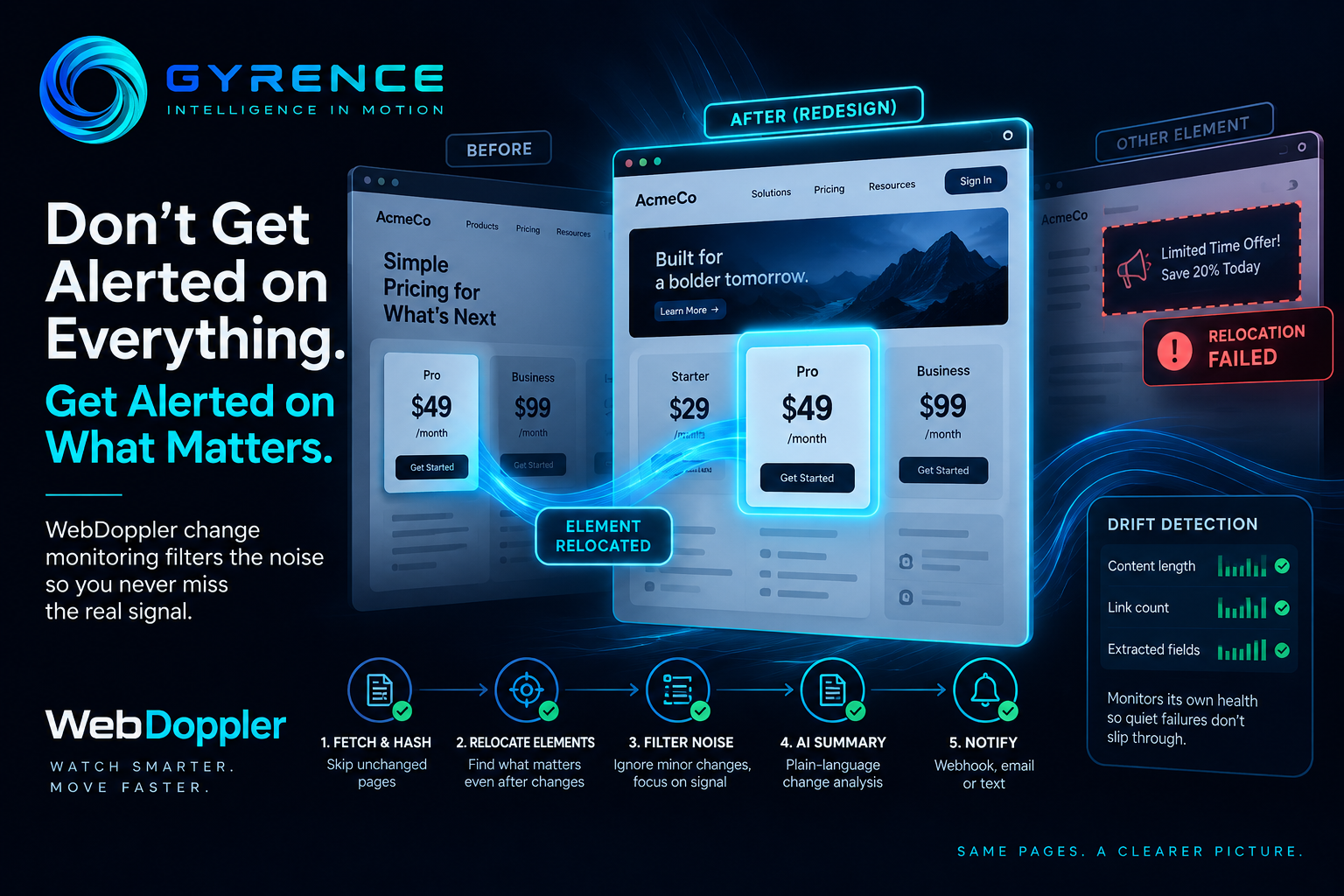
The Page Changed. Should You Care?
Gyrence's WebDoppler tells a meaningful update from routine page noise, and hands you a field-level diff instead of a screenshot to squint at
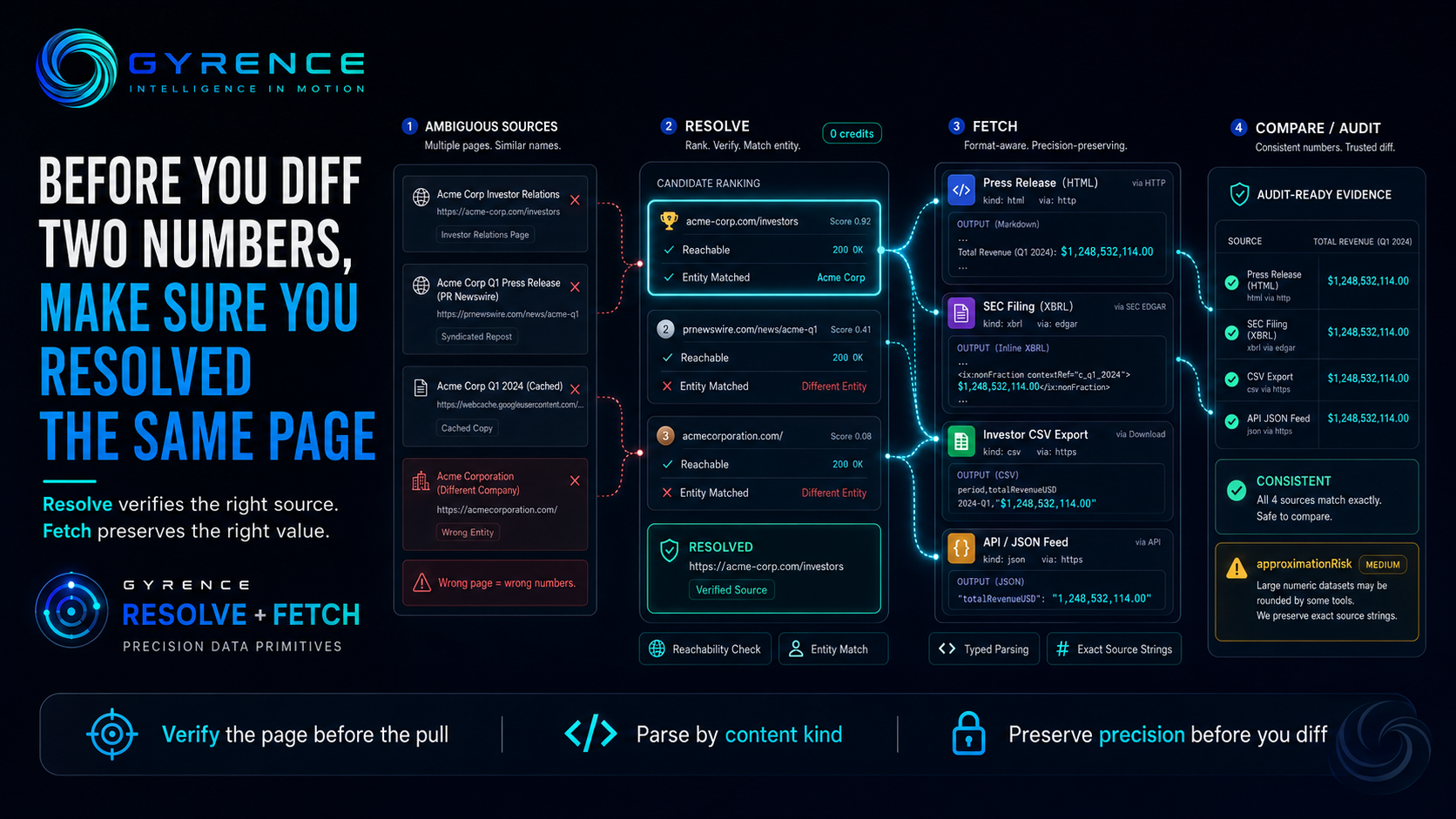
Before You Diff Two Numbers, Make Sure You Resolved the Same Page
A cross-source audit can go wrong before the comparison even runs — by confidently landing on the wrong document, or by comparing a number a format-specific parser already mangled — and Gyrence's Resolve and Fetch primitives are built to catch each failure separately.
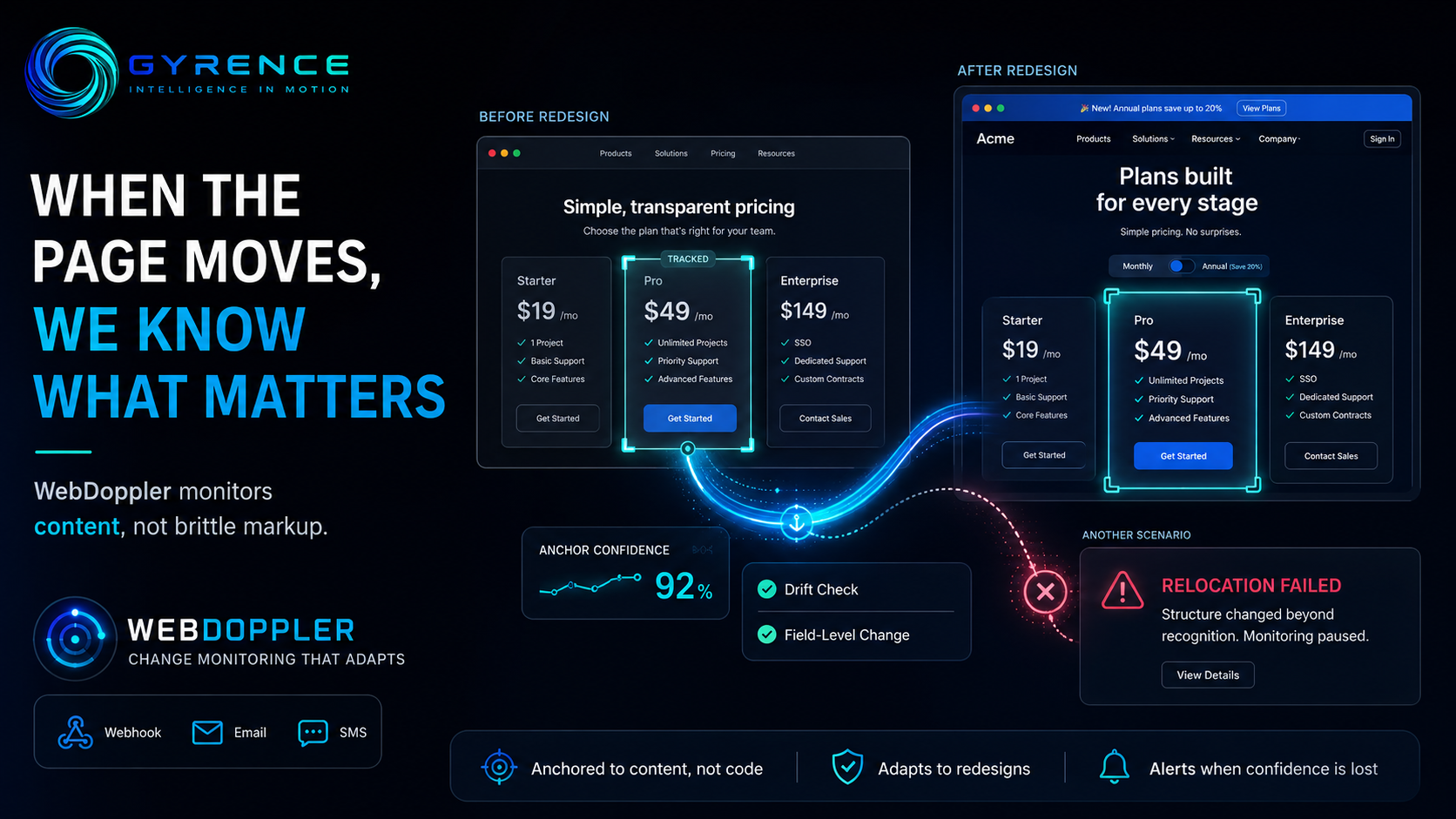
Monitoring a Competitor's Pricing Page? Plan for the Day They Redesign It
Screenshot diffs get noisy and CSS-selector scrapers go silent the moment a page is redesigned — WebDoppler instead tracks a structural fingerprint of what you're watching and always alerts you the moment it loses confidence, instead of quietly reporting nothing.
Your Scraper Doesn't Know What It Just Downloaded — Here's Why That Breaks Agents
Most scraping tools hand every fetched page to an agent as the same flavor of markdown, and the guessing that requires is exactly where agent pipelines quietly fail — Gyrence instead detects what a page actually is and returns a matching, typed structure.
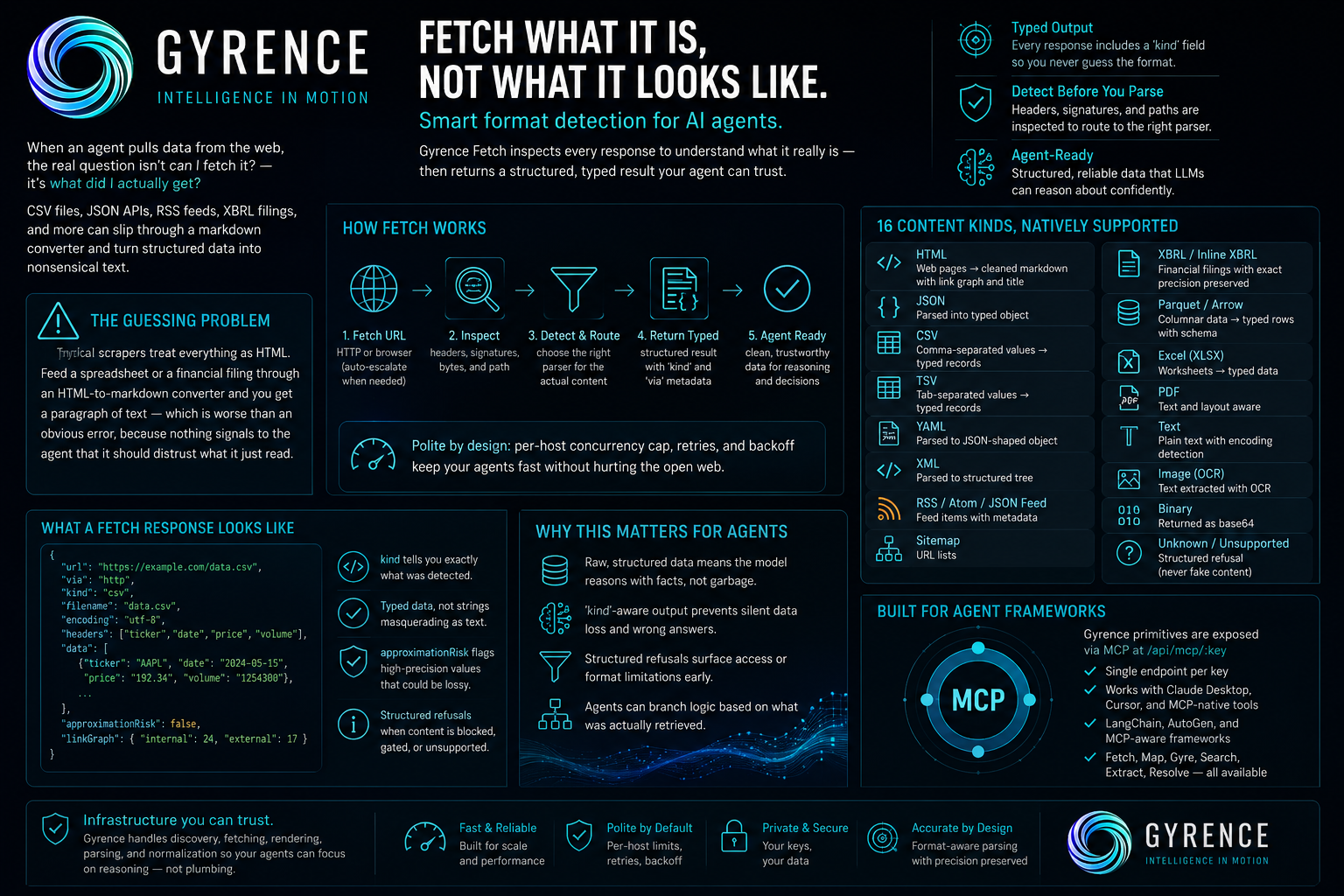
The Crawler You Didn't Have to Build: Acquiring an Entire Public-Records Site Without Writing One
Agent builders who need every filing off a public-records site end up writing throwaway crawlers to handle URL discovery, rate limiting, and JavaScript rendering — Gyrence's Map and Gyre primitives handle all three inside one credit-bounded call.
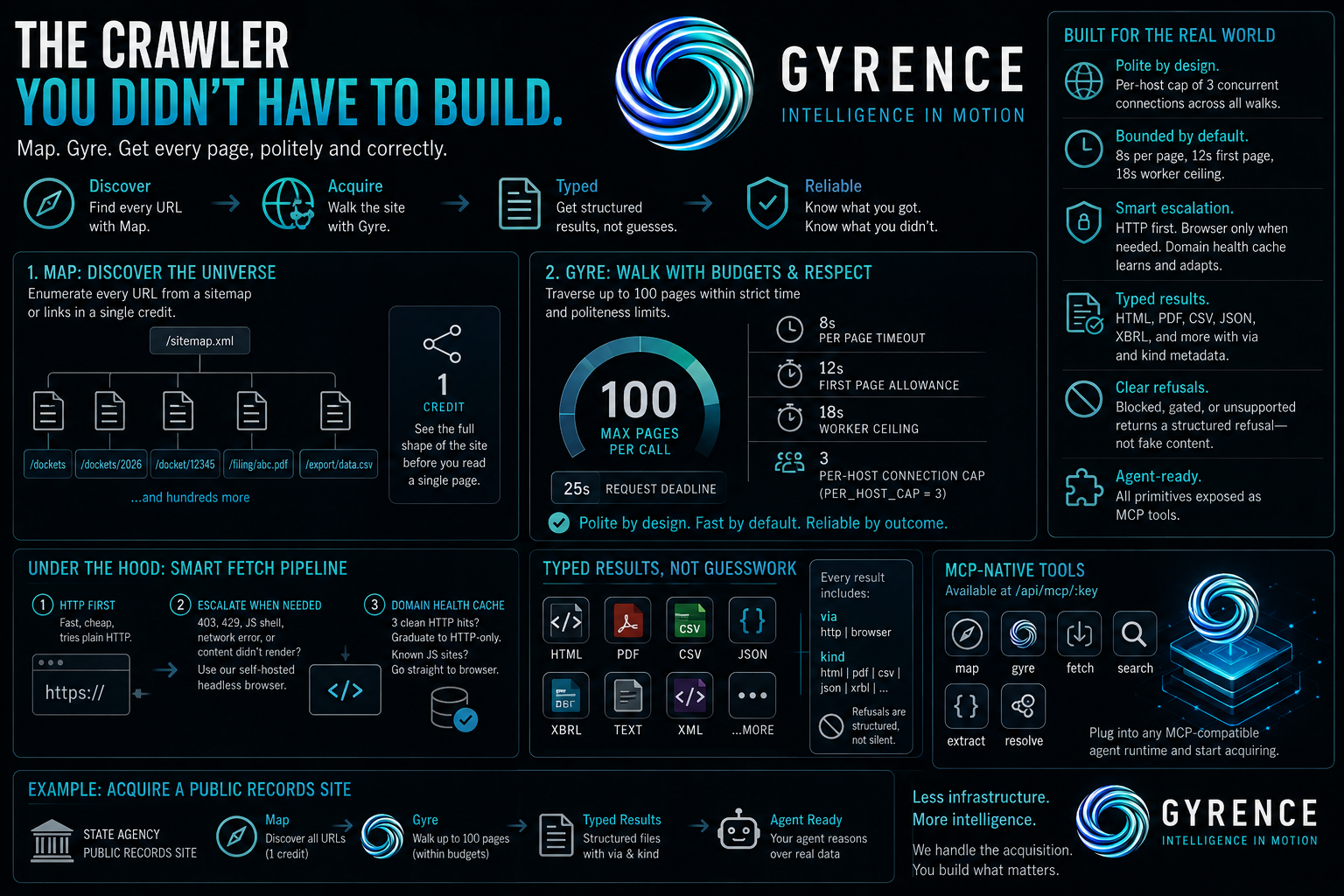
Your AI Agent Doesn't Have a Web-Scraping Problem — It Has a Web-Formatting Problem
Agent builders lose more time cleaning navigation chrome, broken tables, and bloated images out of scraped pages than they spend building the agent itself — Gyrence's fetch pipeline detects what it grabbed and reshapes it into markdown or structured data before your agent ever sees it.
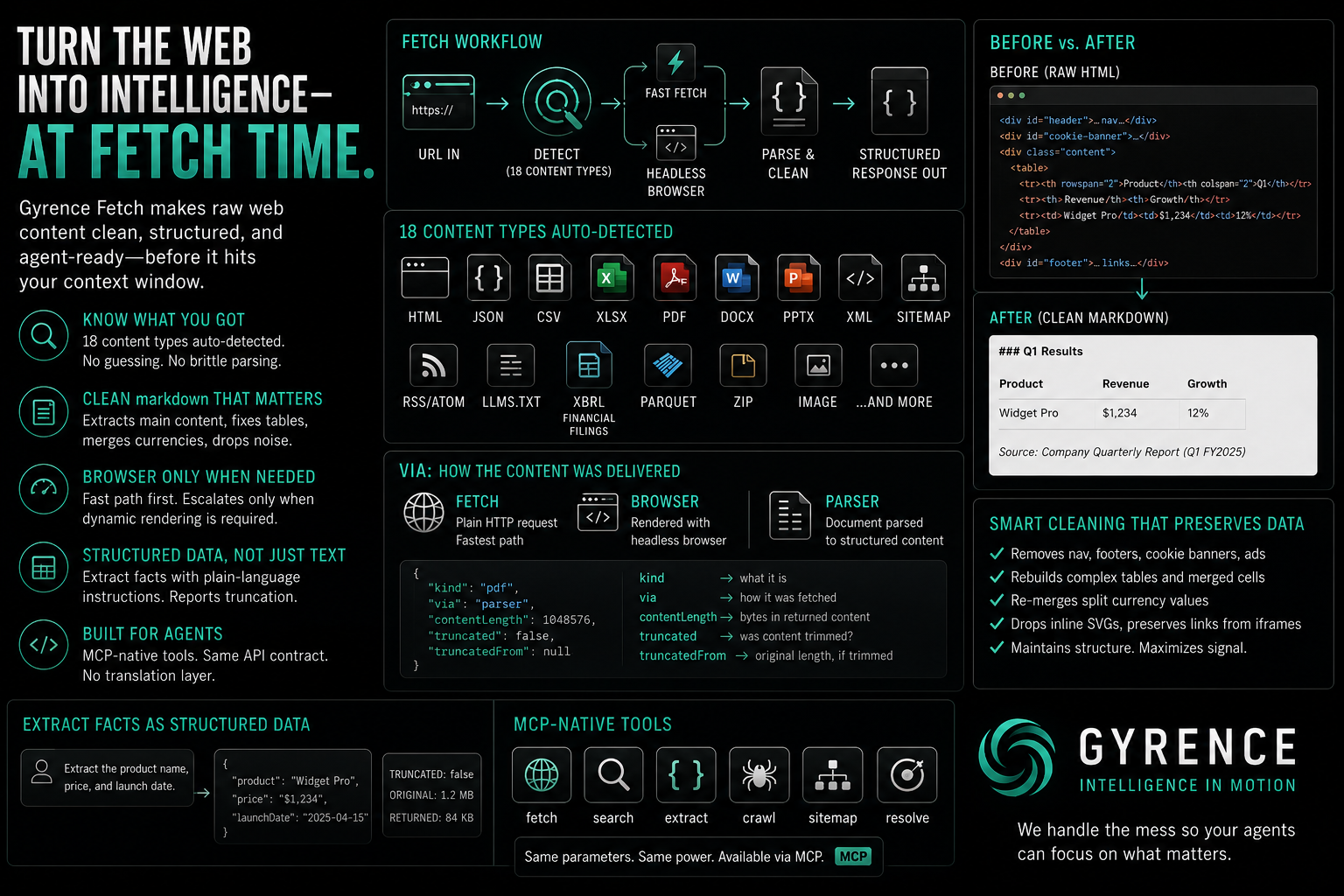
Markdown Isn't a Format: Structuring Scraped Web Data So Agents Don't Have to Guess
Agents built to consume scraped web data usually inherit a different parser for every file type they hit; Gyrence's Fetch endpoint instead returns one typed contract across formats, so an agent can consume a press release, a spreadsheet, or a regulatory filing without knowing in advance what it's going to get.
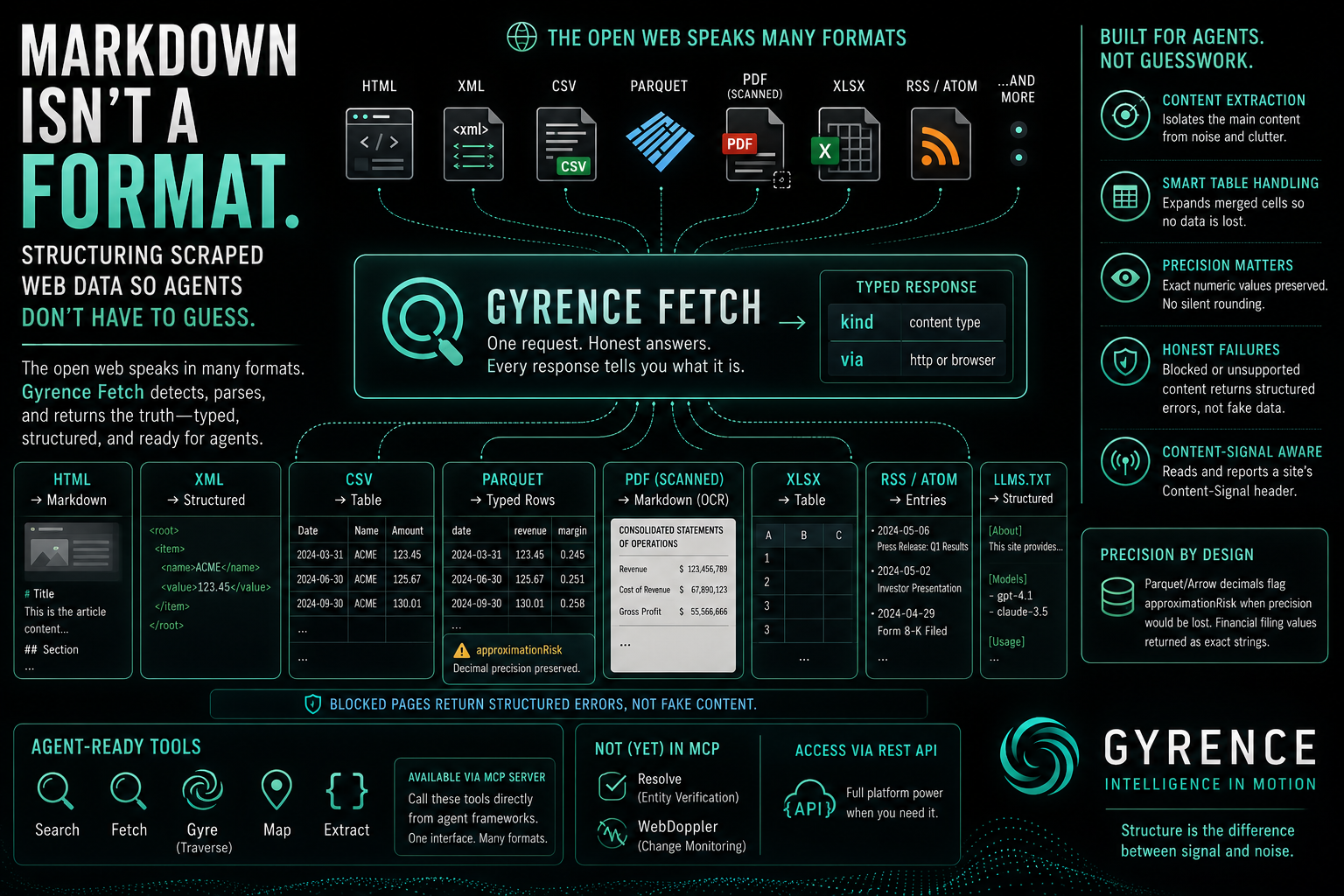
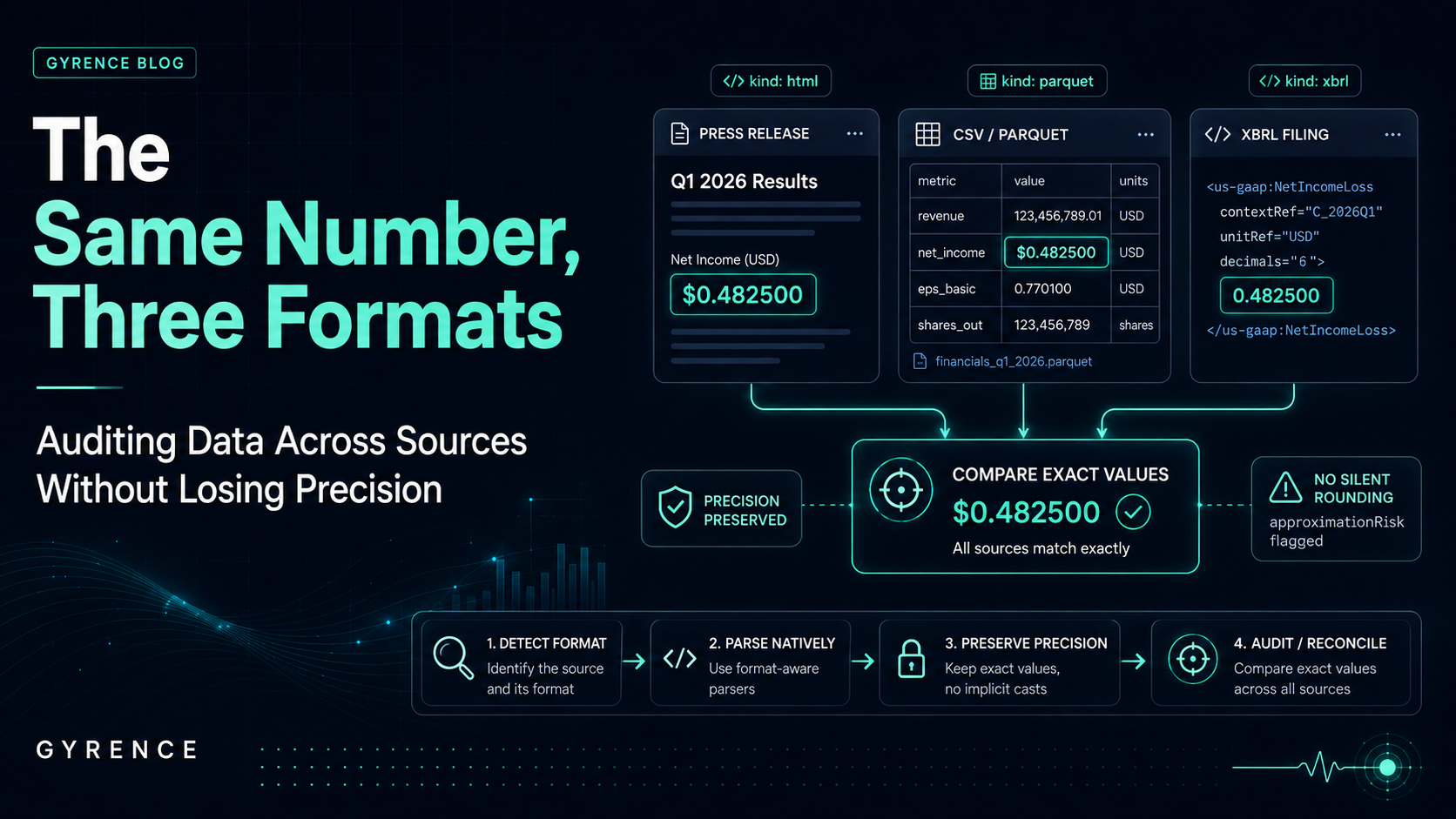
The Same Number, Three Formats: Auditing Data Across Sources Without Losing Precision
Cross-checking a figure across an HTML press release, a CSV dataset, and a structured filing usually means writing a different scraper for each format — Gyrence's Fetch endpoint detects and parses all of them the same way, so the diff compares real values instead of scraper noise.
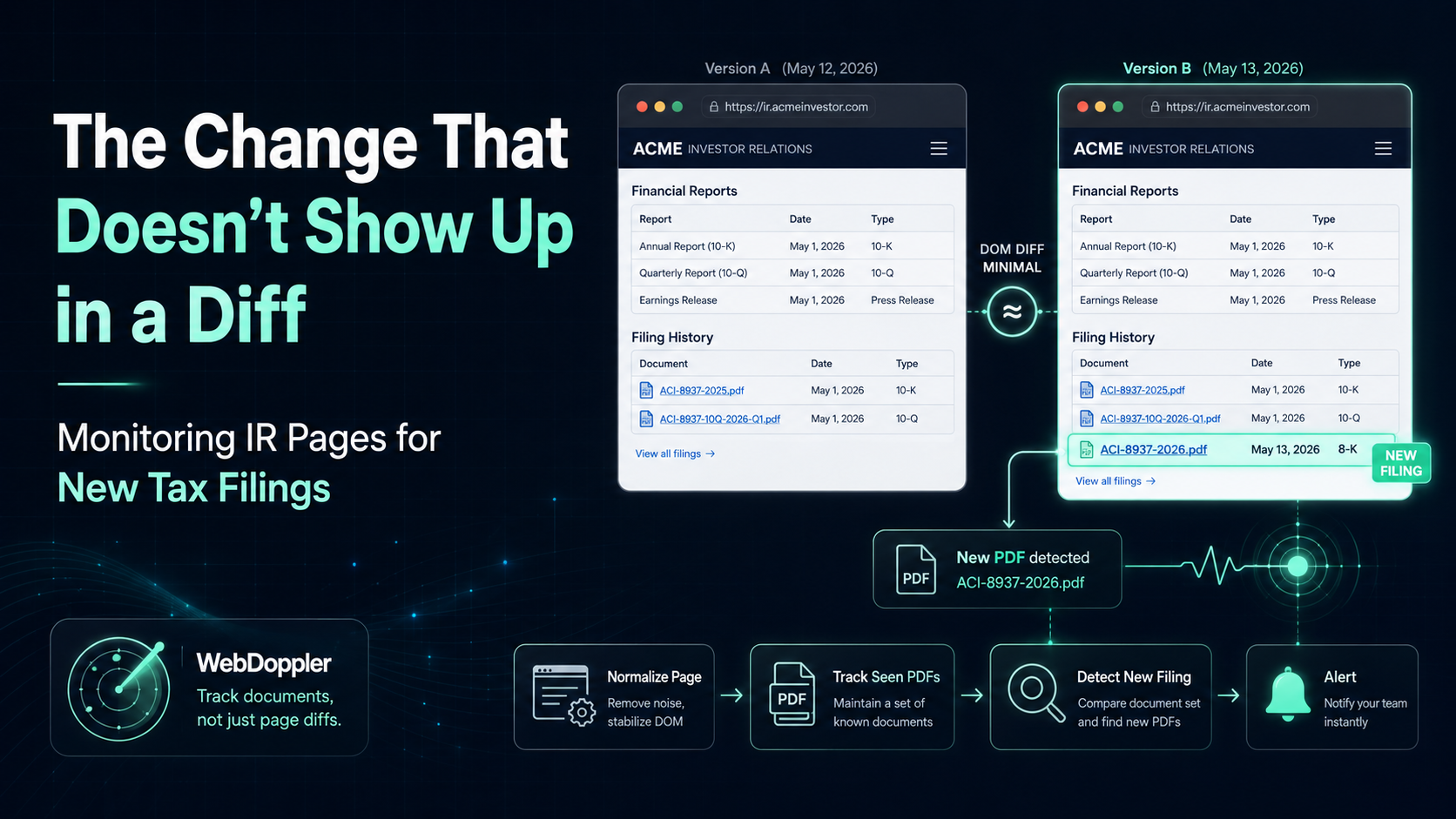
The Change That Doesn't Show Up in a Diff: Monitoring Investor Relations Pages for New Tax Filings
Investor-relations and tax pages barely change visually from quarter to quarter, so WebDoppler tracks the set of documents it has already seen and treats a newly appeared PDF as the real signal, independent of how little the surrounding DOM moved.
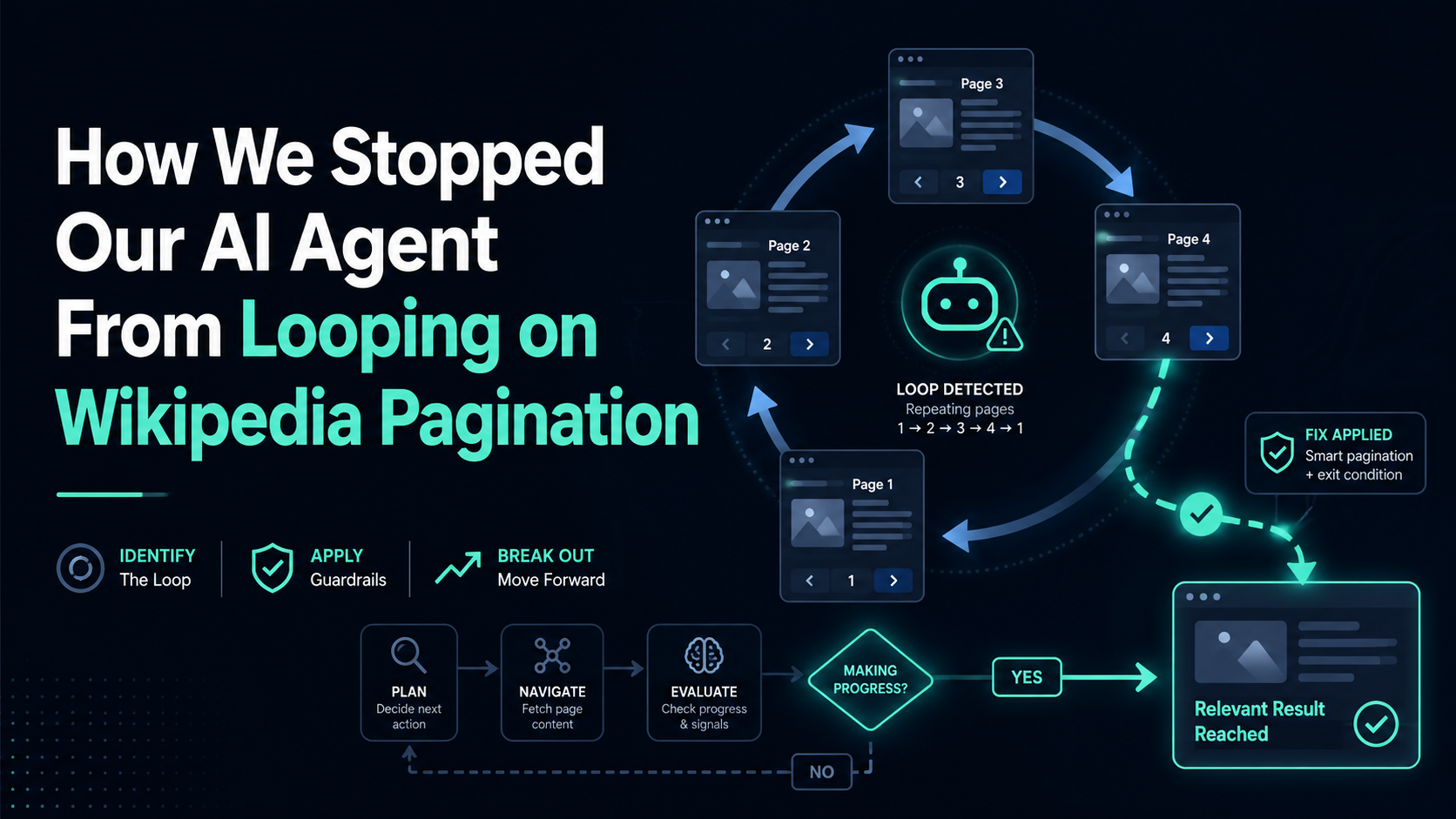
How We Stopped Our AI Agent From Looping on Wikipedia Pagination
Naive graph crawlers burn their entire page budget on pagination archives and mirrored press releases before reaching a single content page. Here's the deterministic fix we shipped — and the numbers.